
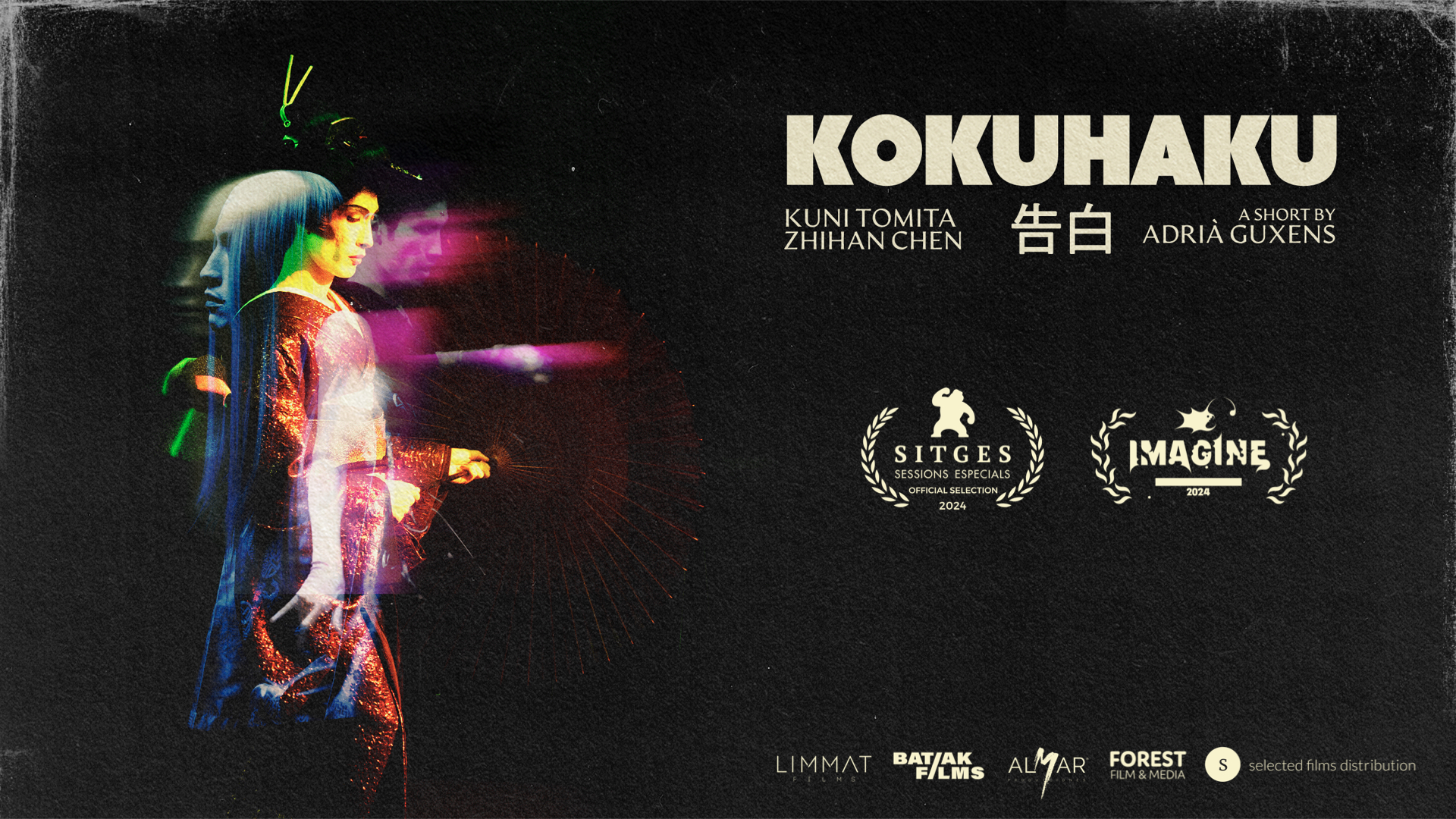
Kokuhaku
Director:Adrià Guxens
Screenwriter:Kuni Tomita, Adrià Guxens
Cast:Kuni Tomita, Zhihan Chen
Producer:Adrià Guxens, Kuni Tomita, Marc Chica, David Delgado, Guillem Barceló, Lluís Domingo, Marimar Matas, Clara Santaolaya
Cinematographer:Irene Manresa
Running Time:
Region:
Year:
Language:Spanish, Japanese
Production Company:Limmat Films、Batiak Films、Almar Producciones、Forest Film & Media
SYNOPSIS
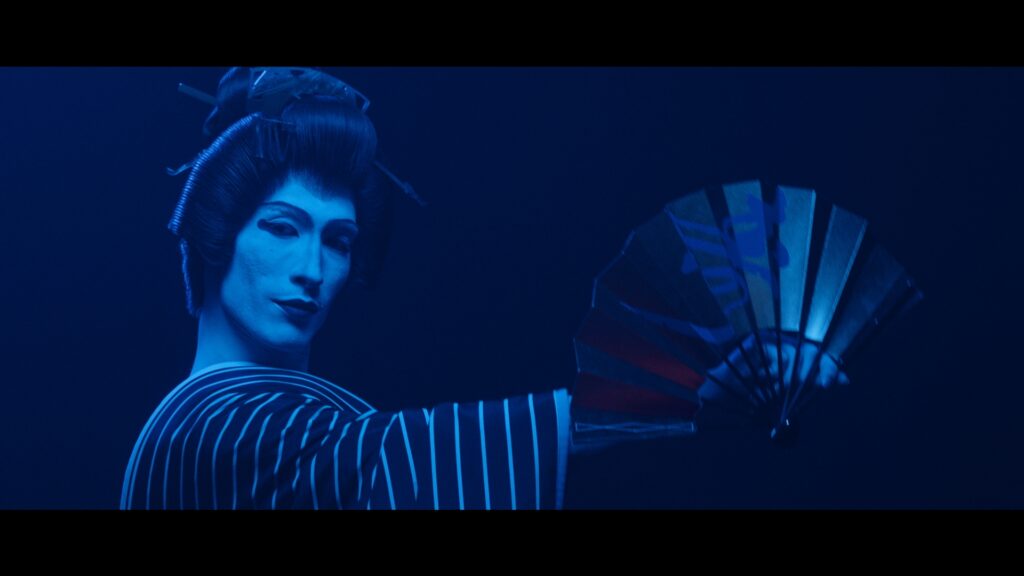
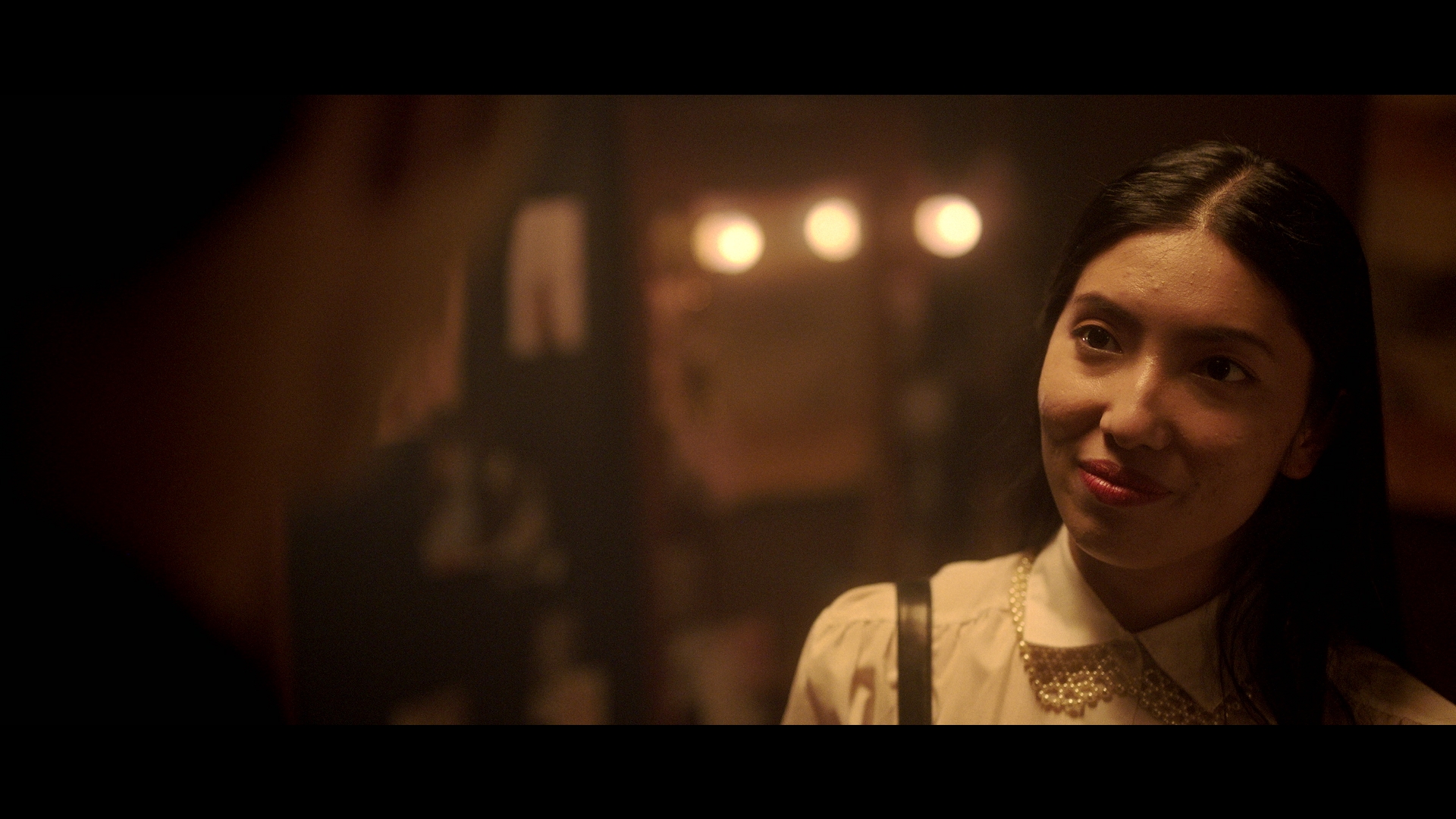
During an interview, Tadashi, a young Spanish-Japanese actor who plays female characters in a theatrical practice similar to kabuki, will return to the past to relive his most intimate memories.
Director Biography
Graduated in Journalism (UAB) and in Film Direction (ESCAC). He has directed the shorts The Door (selected at TIFF KIDS), I Don’t Think It Is Going to Rain (première at ZINEBI and awarded at Málaga) and A Distant Noise (première at the D’A Film Festival Barcelona). He is developing two feature films: Three Songs, a project awarded at the FICX Pro (Gijón), and Lóngquán, which will be filmed in China shortly.

Director's Statement
I had been wanting to address the concept of masculinities in one of my stories for a while; to explore how fragile that thing some call “being a man” can be, especially within Asian culture, where the dominance of the patriarchal structure is particularly strong due to Confucian tradition. At a time when we are experiencing a wave of homophobia and racism around the world, we believe that this short film, entirely queer in its form and theme and featuring a male protagonist who adopts a performative feminine attitude by transforming first into an onnagata and later into Sailor Moon, can help give visibility to a group that is barely represented in our cinema: the Asian-Spanish LGBTI+ community. This is also a story of intercultural dialogue. In it, a Japanese-Spanish actor and a Chinese journalist exchange reflections in a country that has served as an escape route for them, without having abandoned their identities. By this, I mean that it is essential to show the coexistence and blending of cultures and languages in our society, something that happens naturally but has few references, as Asian characters are still heavily stigmatized. Thus, I feel Kokuhaku as a song to life and empowerment, because we cannot live unless we fight for what we want and, above all, unless we embrace who we are.



Leave a Comment