
A Horse Is Not a Metaphor
Director:Barbara Hammer
Screenwriter:Barbara Hammer
Cast:Barbara Hammer
Producer:Barbara Hammer
Cinematographer:Barbara Hammer, Barbara Klutinis, Florrie Burke, Chris Schiavo, Julian Rubenstein
Running Time:30 mins
Region:USA
Year:2009
Language:English
Production Company:None
SYNOPSIS
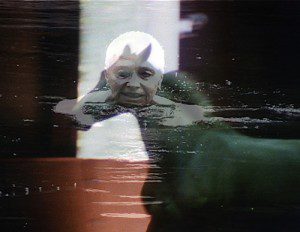
How can the filmmaker make beauty from light reflected in a bag of poison?
How can she embrace the horrors of chemicals and transform them into hope?
The filmmaker, fighting ovarian cancer, returns to her documentary and experimental roots, in a multilayered film of chemotherapy sessions with images of light and movement that take her far from the hospital bed.
As a ‘cancer thriver’ rather than ‘survivor’, Hammer changes illness into recovery riding over the red hills of Georgia O’Keefe’s Ghost Ranch in New Mexico, the grassy foothills of the Big Horn in Wyoming, and the leafy paths in Woodstock, New York.
Director Biography
<p>As a child, Barbara Hammer always wanted to live up to her name. As an adult in the 1970s, she got her wish: her striking voice rang out in groundbreaking films that celebrated female sexuality just as she was discovering her own, during the decade she called “that glorious time of feminist ideals and lesbian bed-hopping.” Hammer, who created more than 100 films on widely diverse topics over the next 40 years, died in New York, March 16th at age 79. Hammer’s partner of 31 years, Florrie Burke, confirmed Hammer died from endometrioid ovarian cancer.</p>
Director's Statement
<p>Freedom is movement, freedom is ease; freedom is a horse galloping with its mane and tail flying in the wind. Freedom is my eye and mind following the flow of expression through movement. Freedom is riding my horse on a trail exploring the unknown or seeing with the eyes that cancer has given me, as the world becomes new again. I am completing a film that shows the power of living in the present to the fullest and with the greatest freedom.</p><p>When I was seven and when I was sixty-seven, my desire was the same. All I wanted was a horse in my backyard. I truly believed as a youngster that I would wake up one morning on my birthday and find a horse there, eating grass on the lawn and waiting for me. To my surprise, I still hope for a horse on my birthday. Perhaps it is my naiveté but more likely it is a persistent sense of hope that keeps this dream alive. The same ability to hope and dream kept me alive throughout the rigorous four and a half months of chemotherapy even though half of that time was spent in bed. As I built my muscles back day by day by taking longer and longer walks and hikes, I knew I was preparing for the day when I could swing my legs into the saddle, pat my horse on her neck, and ask her to carry me onto the beckoning trail.</p><p>My dream came true for me this summer and fall. Although I did not find a horse in my backyard, I did find many people who generously let me ride their horses. I rode and filmed in the Catskill Mountains of Woodstock, and in New York in preparation for the rides in New Mexico at Georgia O’Keefe’s Ghost Ranch and in the Big Horn Mountains at Red Reflet Ranch in Wyoming. Beauty and wonder are not the words to capture the thrill and vastness I felt loping the high desert, climbing the red hills covered by innocent snow, or loping through the dry fall grasses of the foothills. Wherever I rode I took my video camera with and filmed from the horseback, I was able to record the vibrancy and variety of landscape that filled me with hope.</p><p><br></p><p>When I was undergoing extensive chemotherapy, the recommended procedure for ovarian cancer, I never thought I could or would want to make another film. Still, I didn’t give up on photography and filming, my loving partner of 20 years. When a friend and filmmaker flew from San Francisco to take me to the countryside for a week of retreat, I did not protest to her shooting my bald head and skinny body as I swam in the river. Eventually from my own bed in the hospital, I did use my camera to film the huge bags of chemicals dripping into me, the nurse at present, and my puffy face. Throughout the time, I used horse as a meditation image to take me out of the confines of the hospital room and to a landscape that has no boundaries.</p><p><br></p><p>Experimental film can best convey the emotional ups and downs of a cancer patient. The multi-layers of feelings, experiences, visions and tears can be portrayed through juxtapositions, rhythms of editing, superimpositions of images, and a personal point of view which are some of the hallmarks of experimental film. A traditional documentary approach would weaken the impact of emotion and could not convey both the trials and the thrills of hopes that I experienced. .</p><p><br></p><p>Ovarian cancer at stage three is hard to diagnosed with 70% chance of recurrence within two years. Lesbians increase their risk of getting thid disease if they have not had any children and have infrequent gynecological exams due to the homophobic doctors. It is also a difficult disease to detect before metastises. As a lesbian with cancer, I want to bring to audiences both my difficult medical diagnosis so that they can be more aware of the disease and more positive with hope that we can all share with each other.</p><p>‘Survivor’ has never seemed to me to be the right word for a person who lives with cancer. I would choose a word that signifies flourishing, a sense of wellbeing, exaltation and love of life. The horse is not a metaphor, but a living, breathing creature of power and pride that live with me in every moment of y life. Let me share it with others who face the same life challenges I face; let me show this film.</p>
Leave a Comment