

Salomania
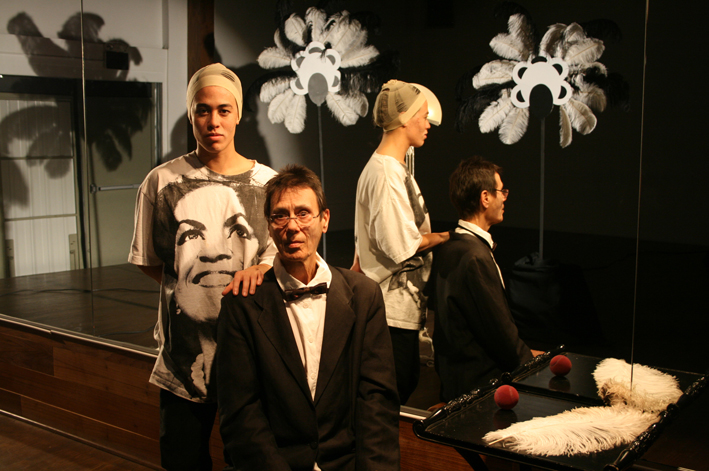
Director:Pauline Boudry / Renate Lorenz
Screenwriter:None
Cast:Yvonne Rainer, Wu Ingrid Tsang
Producer:None
Cinematographer:Michelle Lawler, Micki Pocklar
Running Time:17mins
Region:None
Year:2009
Language:English
Production Company:None
SYNOPSIS
Salomania reconstructs a dance, the “dance of the seven veils,” from Alla Nazimova’s 1923 silent film Salomé. Also shown and rehearsed are sections from “Valda’s Solo,” which choreographer and filmmaker Yvonne Rainer created after having seen Nazimova’s film. The installation takes up Salome as a transgender figure and the motif of a queer appropriation of the exotic. The performers are Wu Ingrid Tsang and Yvonne Rainer.
At the beginning of the 20th century there was a wave of excitement about the character of Salome, who soon earned the name ‘Salomania.’ Women would get together and imitated the dance of the seven veils. A series of dancers became famous for their interpretations of Salome. The figure of Salome stood for entrepreneurial independence and sexual freedom and became an icon of “sodomite” subjectivity.
Director Biography
<p>Pauline Boudry / Renate Lorenz are an artist duo based in Berlin who have worked together since 2004. They produce film installations that revisit historical moments and often-unrepresented or illegible queer histories, with a particular interest in a critical history of the photographic and moving image itself.Their films stage the actions of individuals and groups living—indeed thriving—in defiance of convention, law and economy. Producing plays for the camera, they upset normative historical narratives and inclusions through the staging, projection and layering of moments and figures across time. Their distinctive treatment of the moving image, their use of film loops as a mode of performance in itself, and the fluency and pleasure of their cinematography has gained them widespread international acclaim.</p>
Director's Statement
<p>The script of the silent film Salomé is based on the play of the same name by Oscar Wilde and follows the Biblical story of the Jewish princess Salome. King Herod desires his youthful stepdaughter Salome. She in turn is interested in the missionary Jokanaan (the Baptist), who, however, rejects her. She gives in to Herod’s desire to see her dance, then demands the head of Jokanaan on a platter as a reward. She kisses the severed head.</p><p>The installation ‘Salomania’ takes up motifs from the silent movie, such as gazes, the active desire of Salome, and the figure of the veil, but also elements of Art Deco, which the movie celebrates. This prevailing design style of the 20s and 30s applied modern materials and images of technological progress. But why have they been mixed with “Oriental” material and images such as ostrich feathers and palm trees?</p><p>While images of “farness” and the technological can be seen as part of colonial politics—further familiarizing spectators with the “foreignness” of the colonies, but also seeking to justify colonial domination—at the same time they have been transformed by the film Salomé. Here they are established as images that make space for female or “transvestic” fantasies and desires. A space between the genders and between Orient and Occident appeared to be possible.</p>



Leave a Comment